
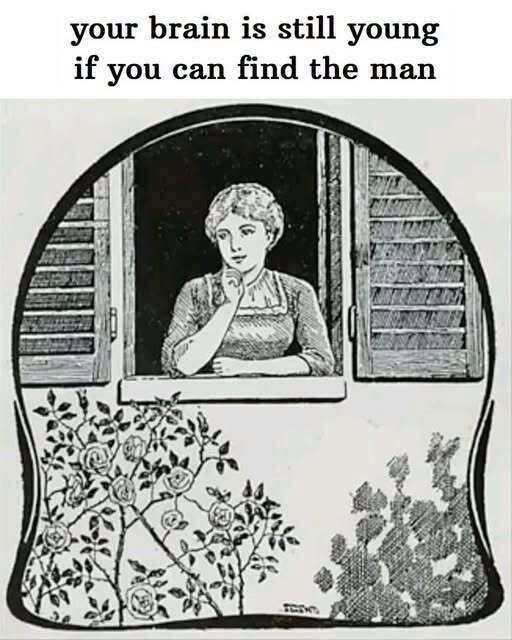
The black-and-white illustration appears to show a young woman in an old-fashioned dress standing beside an open window, resting her hand on her chin. Beneath her is a detailed garden filled with roses, leaves, shadows, and intricate lines. However, the image contains a hidden optical illusion that challenges viewers to find a man within the scene.
The hidden man is not a separate figure standing in the garden or positioned behind the woman. Instead, his face is cleverly constructed from the existing elements of the illustration. The window, flowers, leaves,
shadows, and surrounding outlines combine to form another image.
Finding him requires viewers to change the way they examine the picture. Rather than searching for an obvious person, they need to look at the larger shapes and spaces throughout the illustration. Lines that appear to belong to flowers or the window may actually form part of the man’s facial features.
The challenge encourages people to “look through the image, not just at it.” Focusing intensely on one section can make the hidden face harder to recognize. Moving your eyes across
the entire illustration and occasionally stepping back can help reveal the larger pattern.
The young woman is intentionally designed to attract most of the viewer’s attention. Because she is the clearest figure, the brain naturally focuses on her instead of processing the image as a whole. This is what makes the illusion challenging.
The hidden man’s face becomes easier to recognize once the viewer stops expecting to find a conventional portrait. The illusion depends on perspective, visual grouping, and the brain’s ability to reinterpret familiar shapes.
Although the image claimsthat finding the man proves you have a “young brain,” the real challenge is more about shifting perspective and noticing patterns. It demonstrates how easily our attention can become fixed on


Comments