
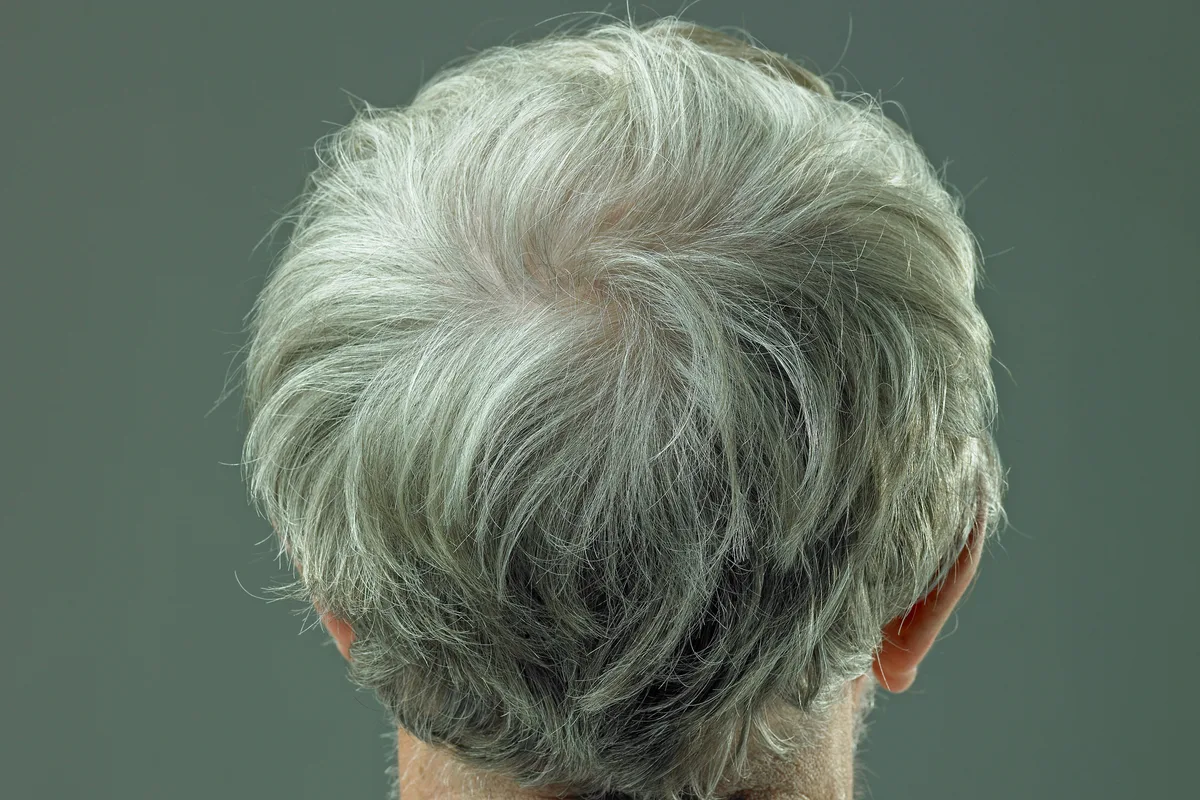
It’s easy to see why going grey is considered a sign of a stressful life – just look at pictures of prime ministers and presidents before and after their time in office.
It’s also one of the most visible signs of our advancing years; around 90 per cent of us will be grey by the time we’re 60.
Unsurprisingly, the industry related to preventing or covering up this loss of hair colour is estimated to be worth tens of billions of dollars globally a year, and the wild west that is social media has supercharged the number of people claiming their products can prevent or reverse early greying.
But to biologists, grey hair is not just a cosmetic issue. Greying hair provides a uniquely easy way to watch and study how our bodies age.
The recent discovery that the process can sometimes go in reverse, and strange cases of grey-haired people regaining their hair colour while on certain medicines, offer not just the realistic hope that hair can be restored to its former glory…
They also herald the exciting possibility that we could use similar techniques to reverse ageing in other tissues of the body.
The science of greying
Hair turns grey when special cells at the very base of the hair, known as melanocytes, stop producing the pigments that normally give opaque colour to the growing hair, such as eumelanin (brown-black) or pheomelanin (yellow-red), or when there are too few melanocytes to effectively add colour to the hair.
A diagram of the follicle of pigmented hair compared with grey or white hair
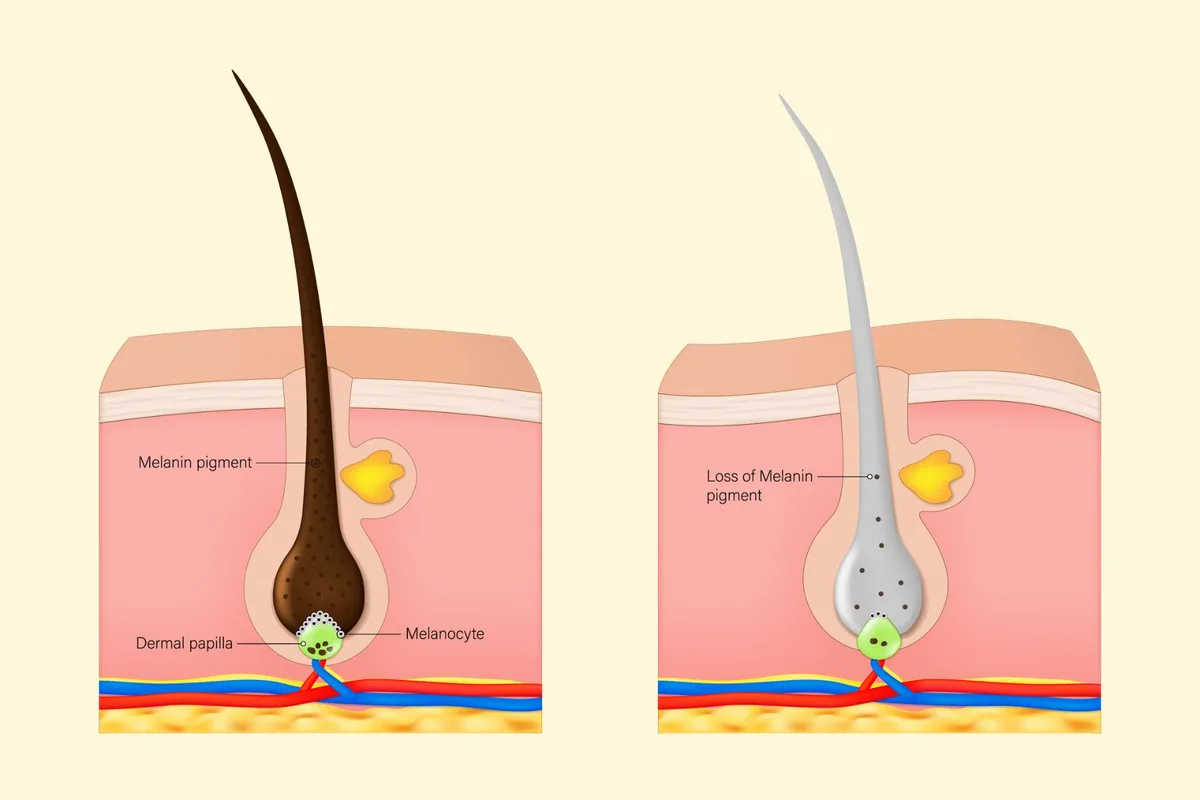 A loss of melanocyte stem cells stops the production of hair pigmentation, so pigmented hair (left) becomes grey or white (right) – Credit: Getty images
In healthy, pigmented hair, a population of cells known as melanocyte stem cells sit in a ‘bulge’ to the side of the hair follicle.






Comments